
Happy Friday! Today we take you back to a time when superheroes promoted safer sex. Never heard of Condoman? Jeesh, betcha don’t know the Condom Fairy either! Check out this sex ed poster circa 1991.

Posted on
September 7, 2012 by
Mary
Posted on
June 25, 2012 by
Fosgood
So you’re back in the dating game. It’s exciting, but you want to make sure your needs are met and you don’t want to be pressured into doing something sexual that you may feel is repulsive, scary, dangerous or just yucky. How do you begin negotiating with someone who may find what you like to do repulsive, scary, dangerous or yucky? People have such a difficult time discussing sex with a new partner. I’m here to help!
In countries with the lowest levels of unplanned pregnancy and STI rates, everybody knows the rules. Since elementary school the same messages about safer sex are given by parents, religious organizations, the media, and schools. Again and again. Year after year. No negotiating. No unprotected sex. Testing before a new partner. That’s it!
In this country people make up their own rules. How do you make your rules clear to a new partner and how do you know their rules? I have a solution that would make the conversation go so much easier or even eliminate it altogether if only everybody would do it. I call it “Rules for SEX.” Think of what a joy it would be to just whip out your “rules” and say, “You show me yours and I’ll show you mine.” Exchange lists, take out your highlighters and begin. Here are a few suggested steps:
Step one: THINK
What must a potential partner absolutely agree to, what would you absolutely refuse to do under any circumstances, and what could you negotiate?
Step two: WRITE
Decorate your rules, use pictures, have them reflect who you really are or who you want to be. By taking the time to write your rules, you can clarify what you want from a partner and are less likely to slip into behaviors you want to avoid.
Step three: SHARE
Have them write their rules then exchange, negotiate, have a good laugh – or run for the door.
Posted on
June 19, 2012 by
E.G. Hanna
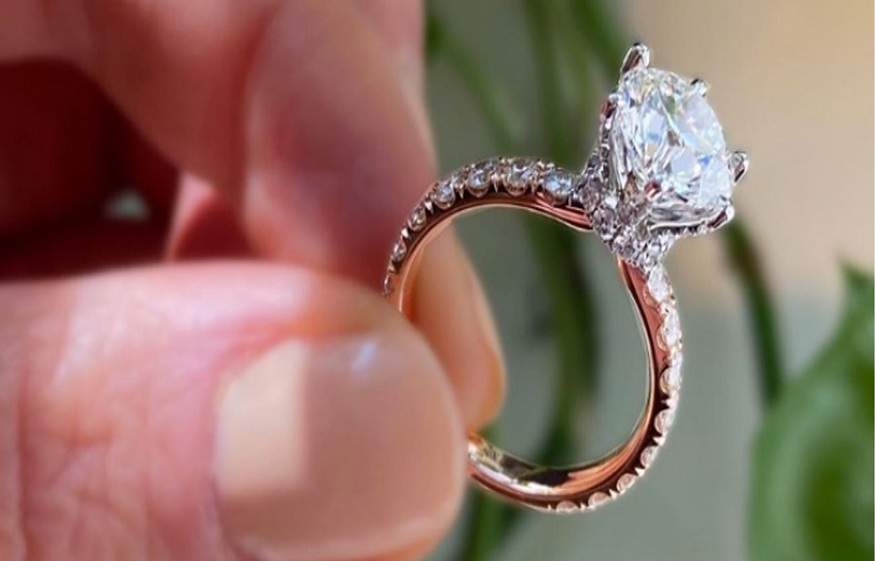
Yes, that’s a haiku, what can I say; I really love my Nuva Ring. I spend a lot of time at work counseling women on their birth control options, and I’ve noticed that sometimes when women request the pill, it’s with a sigh and a “Well I’ll just try to set my phone alarm or do it when I get up in the morning,” after telling me how last time they just couldn’t remember to take it. You know, I can’t take pills either. I’m forgetful, and worse, when I do remember sometimes I’m just too lazy to get up and go to the other room to get them. Luckily I discovered the Nuva Ring. We’ve all seen the commercial with the annoyingly catchy jingle (Oh oh, oh oh oh oh!), but it’s still something a lot of women aren’t very familiar with.
The gist: It’s a plastic ring, you place it at the top of the vagina by your cervix, where it releases hormones over the course of 3 weeks and prevents ovulation, just like the birth control pill does. The Nuva Ring site does a nice job of explaining how to insert it: “After washing and drying your hands, remove NuvaRing from the foil pouch. Holding NuvaRing between your thumb and index finger, press the sides together. Insert NuvaRing while lying down, squatting, or standing with one leg up – whatever is most comfortable for you. Gently push the folded ring into your vagina. The exact position of NuvaRing is not important for it to be effective. If you feel discomfort, NuvaRing is probably not inserted back far enough into the vagina. Use your finger to gently push the NuvaRing farther into your vagina. Rest assured, NuvaRing cannot be pushed too far up or get lost in your body. In fact, NuvaRing cannot go farther than the cervix. Once inserted, keep NuvaRing in place for three weeks in a row.” To remove, just reach up with your finger, hook it around the edge of the ring, and pull it right out. After seven days (just like your seven days of placebo pills in your pill pack), put a new one in.
There is nothing else quite like the Ring on the market yet, so I get some strange looks when I tell women about it. “Oh … no.” “It just sits there inside you?” “I feel weird having some foreign object inside of me.” Fair enough! Yes, it’s a plastic ring; yes, you have to keep it inside your vagina; yes, it stays there for at least three weeks. It’s a little weird. But I promise you don’t feel it when it’s there, and usually your partners can’t feel it (and if they can, it’s not ever-present, and it’s not uncomfortable). It’s the most convenient method that has combined hormones, which are best for keeping your periods regular (unlike the Depo shot or the Mirena IUD which, while more long-term, alter or end your period while in use). Although you can leave it in for a full four weeks if you like, and insert a new ring right away, allowing you to skip your period if that’s more your style. (Always ok this with your doctor first.)
Have you guys ever tried it? What was your experience?
Posted on
June 14, 2012 by
Firdaus
At Planned Parenthood of Southwest and Central Florida*, you can now find One brand condoms – for free (as all of our condoms are). These little love gloves are packaged in the cutest wrappers that make you want to grab a handful and share them with your lover(s) and friends! Whether you like cute animals, sports, music or nature, there’s One condom that’s perfect for you.
One condoms offer the protection you need to prevent unwanted sexually transmitted infections, including HIV/AIDS. The company website says that a portion of every One condom purchase supports the prevention of HIV/AIDS in Africa. That should appeal to the philanthropist in you! They’re also great conversation starters. We’ve posted here before about how to negotiate condom use, but for some of us, just bringing up or bringing out the condom at sex time can make us feel embarrassed or like we’re accusing our partner of not being truthful. Remember, your body is your temple. Where it goes and/or who goes in it is completely up to you. And since your temple is made of flesh and glands, you might as well keep it clean, keep it safe, and enjoy a healthy sex life.
One condoms provide a buffer zone for condom negotiations. You might say, “Hey, pick One!” You and your partner can sift through the clever designs until you find the One best suited for your soiree.
So come by any of our 7 health centers and get yourself a handful of these free love gloves!
Posted on
June 6, 2012 by
Fosgood
Abstinence is a confusing word. Adults have been throwing it at teens for years, having teens sign pledges, and teaching abstinence-only education. I’ve found when I ask people to define what they mean by abstinence, they get a puzzled look on their face. Responses are far ranging and varied. Most people equate abstinence with not having sex, right? But how do you define sex? From a medical point of view sex is oral, anal or vaginal intercourse. But what about everything else? During classes I’ll ask participants to complete the following statement: “If someone is abstinent they can still _________.” Answers will range from do nothing (as in no physical contact) to kiss, have oral sex, have anal sex, masturbate, or do anything but put-a-penis-in-the-vagina sex.
Picture this scenario: You’re getting to know a new person and you feel the sexual tension building. You look them in the eyes and say, “I think you should know right from the start that I’m abstinent.” Their response could be, “Cool, so you can still give me a blow job, right?”
Another statement I often hear repeated is that abstinence is the only 100% sure way to avoid pregnancy or a sexually transmitted infection. Yes, but again, what do you mean by abstinence? If you mean no physical contact of a sexual nature, that would be true. But, you can cause a pregnancy or pass a sexually transmitted infection by having seminal fluid from a person’s fingers or the tip of a penis spread to a vulva or inside the vagina. HPV (human papilloma virus) and HSV (herpes simplex virus) can be spread by genital skin-to-skin contact – no intercourse or exchange of fluid is necessary.
When discussing abstinence with a teen or if abstinence is your personal choice, make sure you are very clear of your own definition. Be very clear what are you willing to do and are absolutely sure of the risks involved in any sexual activity within your definition. Then you must be able to convey this information to a potential partner so there is no doubt as to what your limits are. Finally, you have to stay within your parameters. Not doing so is the main reason abstinence fails. We’ve all heard so many times that sex “just happened.”
If being abstinent is important to you, then the power is in your hands – but education is key. For more information about abstinence visit our Planned Parenthood website.
Posted on
May 3, 2012 by
Genevieve
It can be difficult to decide whether you should use lubrication and which type and brand is right for you and your partner. Here are a few simple tips to hopefully help you find the right one. Remember, it can be like Goldilocks at first and it may take experimenting with a few different lubes to find the one that is just right.
Reasons to consider using lubricants:
Water-based lubricants with glycerin (Astroglide, KY Jelly, Pink) & water-based without glycerin (Good Clean Love, Blossom Organics, Please) |
Silicone-based lubricants (Eros Pjur, Sliquid, Wet Lubricant, Liquid Silk) |
Pros:
|
Pros:
|
Cons:
|
Cons:
|
FYI: People have come up with some very strange things to use for
lubricants. The best way to explain what to use and not to use is as lube is to simply remember: anything you put in your hair, anything you cook with or eat, and anything you can find in your bathroom should not be used as a lubricant. People should know that if it is not designed to be used with condoms they should not use it. Furthermore, anything with oil in it can trap bacteria in the body and cause a condom to break.
By the way, there are also lubes that are organic, vegan, phylate-free, and paraben-free. For a list of a variety of lubes, you can visit Goodvibes.
Posted on
May 2, 2012 by
E.G. Hanna
Every once in a while, a news story pops up about some new male birth control that’s in the works, and I always think the same thing: “I’ll believe it when I see it.” Although we get an occasional tease in the media, birth control has always largely been the domain of women. Sure, vasectomies have been around for a long time now, but when it comes to reversible birth control men have condoms, withdrawal, and…what else? Let’s do a quick run down of male birth control options, the current and the (allegedly) upcoming.
Condoms. You know how these work; if you don’t, we’ve covered it here on the Feronia Project.
Withdrawal. Also known as the pull out method. I’m super biased against this method for three reasons which we’ll discuss.
Here are my thoughts:
Vasectomy. Story time! I was on a first date with this guy, and he mentioned that he wanted to get a vasectomy soon and was just waiting for an appointment with his doctor. Instantly, music swelled and cartoon birds started flying through the air, and my eyes turned into hearts and sprung out of my head. (That really happened. We broke up, though.)
Vasectomies deserve their own post (which is coming soon!) because there are a lot of myths and misinformation surrounding them. I think the biggest barrier to a vasectomy is getting the man to agree because a lot of men think you’re cutting off their testicles or forcibly removing their manly essence or something. In reality, vasectomies are safe, quick, and easy. Ejaculation still occurs, but the vas deferens (the tube that carries sperm) is blocked so that there is no sperm in the seminal fluid. Sex still looks and feels totally normal. No organs are removed, hormones and sperm production continues; sexual pleasure and sexuality are not effected.
(PS: Our local Planned Parenthood offers vasectomies; if you’re in Florida and interested in a vasectomy, check out our man Dr. Stein at his site).
RISUG. The most exciting up-and-comer. The hard-to-pronounce acronym stands for Reversible Inhibition of Sperm Under Guidance and in the US is called Vasalgel. I’m not a fan of the names, but otherwise it sounds amazing.
The vas deferens is numbed with an anesthetic and then a polymer gel is injected into it and kills sperm – for up to 10 years. Then, when the man decides he’s ready to have kids, there’s another injection to get rid of the polymer and welcome back sperm. It’s been in trials for about 15 years in India, and starting trials this year in the US with hopes that it will be available in the United States by 2015. I’m really hoping this becomes available and catches on, because it sounds like it could be a revolutionary new family planning tool for men and women both.
What else?
Apparently there are other things potentially on the horizon, creams, implants, and pills, which I can’t find a lot of information on, individually. However, you can read this article on male birth control options on MSNBC and the men who are trying them out.
Here’s my question, though. Say we finally get reversible male birth control on the market – will men use it? Would women want them to?
For a lot of people, the answer is an obvious yes. Many men will be delighted at the chance to have more control over the decision of when to get pregnant. Women who have experienced bad side effects on hormonal birth control will be happy to let their men try it out so they can have a break. I think a lot of men may be suspicious and hesitant; men aren’t used to their sexuality being medicalized like women’s sexuality has. Plus, for some men, there may be psycho-social factors to take into account, given the cultural links between masculinity, power, the penis, testicles, virility, etc. For women, giving up control may feel too risky – if a guy misses his pill or his birth control otherwise fails, he’s not the one getting pregnant.
What do you all think? Would any of you try RISUG? Have you had experiences with condoms or vasectomies, good or bad? Dudes, would you take a birth control pill? Ladies, would you feel comfortable with your man being the one on the pill? Tell me about it.
Posted on
April 30, 2012 by
Fosgood
So, you meet someone you think you want to have sex with and you are trying to be a responsible adult when it comes to sex. You’ve heard all the scary talk about HIV, chlamydia, herpes, HPV, etc., and you are definitely not ready to bring a baby into your life. How do you bring up the topic with your potential new partner?
Well, the best time is not when the hormones are peaking, bodies are sweating, hearts are pumping and sex is about to happen. The blood flow is not pulsing in an upward direction towards your brain, so the conversation might not be most effective at this time. Pick a time when you are fully clothed but in a private place. Starbucks is great for a first date, but probably not the best place to do some sexual negotiating.
There has hopefully been some indication that this person is interested in you as more than a friend. A longing look, a kiss or grope before you say good night, a bit of steamy sexting are always good indications that someone is looking to take it to a physical level. If you read the signals wrong and start a conversation about safer sex with someone not interested in you that way, this could be one of the most embarrassing moments of your life. But, better to be embarrassed now than having to explain to all future partners about these little bumps, periodic blisters or need for daily meds.
First, you need to be clear in your own mind: what do you want from your partner? Always use a barrier like a male or female condom? Does your definition of sex include oral and anal sex as well? (Remember health class? Sex includes oral, anal and vaginal intercourse.) A full battery of testing for sexually transmitted infections before you go any further? And that just covers infections. What if the possibility of pregnancy is in the picture? Is this someone you would want to parent with? What if a pregnancy should occur? Do you agree on what the outcome should be: parenting, adoption, abortion?
So you’ve figured out your requirements for sex. You’ve got your list and checked it twice. What do you say? How do you start the conversation? You need to be yourself. Does humor work for you? Do you sort of slide into a topic or just blurt things out? No matter how you start the conversation, it will most likely feel awkward, unless you’ve done it before. Practice may not make perfect, but it can help. A few ideas:
“I’m really enjoying our time together.”
“I feel like we’re getting closer and things are heating up.”
“I think we need to talk before we go any farther.”
“I’m really into you, but before you get into me we need to talk.”
(If these sound totally lame, you come up with something better!)
How your potential partner reacts should tell you a lot about whether or not you want things to progress to a physical level. Do they appear angry, shocked, offended, or clueless as to what you are talking about? If so, you may want to slow down and reconsider your next move. Hopefully, they will be relieved that you were brave enough to start the conversation and were just trying to figure out how they could bring up the topic.
You are a responsible adult now, so act like one. Make a date to go get tested together. Do some research on ways to make safer sex more fun.
(Hmm – sounds like a good idea for another blog!)
Posted on
March 27, 2012 by
Fosgood
People are very casual about telling others to just use a condom and sex will be safe. But a recent study done at the Kinsey Institute for Research in Sex Gender, and Reproduction showed that many people have problems with using a condom correctly.
The most common problems reported were:
Who would think that using a condom could be so complicated! Here’s a good video on how to correctly use a condom. (And remember – don’t flush them!)
Posted on
February 3, 2012 by
Eleanor
Happy Friday, kittens! We hope you have a great weekend.
Yesterday we posed these questions to test your knowledge about condoms and safer sex. As promised, here’s the answers; some are unbelievable!
1. When were condoms first used and by whom?
Egyptians in 1,350 BC
2. What were the first condoms made from?
Animal bladders and intestines. (Yep, you read that right.)
3. In the 16th century, what were condoms made from?
Linen with a ribbon sown into the open end that drew the condom snugly around the penis.
4. In the 18th century, what were condoms made from?
Sheep, lamb and goat intestines and fish skin. (Can you imagine how the fish skin one felt? Oh my.)
5. Who made the first rubber condom and when was it made?
Charles Goodyear in 1844.
6. When and why did condoms become acceptable to the US public?
During WWI after hundreds of thousands of soldiers returned home infected with gonorrhea and syphilis.
7. What % of condoms are purchased by females?
50%
8. What country uses the most condoms?
Japan (Go, Japan!)
9. How long can a condom can be stretched?
4 feet
10. What are the 2 main reasons condoms break?
Oil-based lubricant used and condoms stored in heat. (That’s why you should never store condoms in your car.)
For more information about using condoms, check out Planned Parenthood’s website.